Worming from Home daily income decides how fast you climb from broke Jr. Analyst to Worm of Wall Street, so knowing where the cash actually comes from saves you hours. This guide breaks down the best money methods for every phase of the game, from your first keyboard-slamming shift to intern-powered passive income.
Worming from Home launched on September 4, 2026 for $7.99 (with a 25% launch discount bringing it to $5.99), and it's far sillier than its spreadsheet premise suggests. You play as a pink earthworm flinging your ragdoll body across a keyboard to answer emails, fill out spreadsheets, and survive video calls as a junior financial analyst. According to the official Worming from Home Steam page, you upgrade, invest, and grind toward that promotion — and money is the thread tying all of it together.
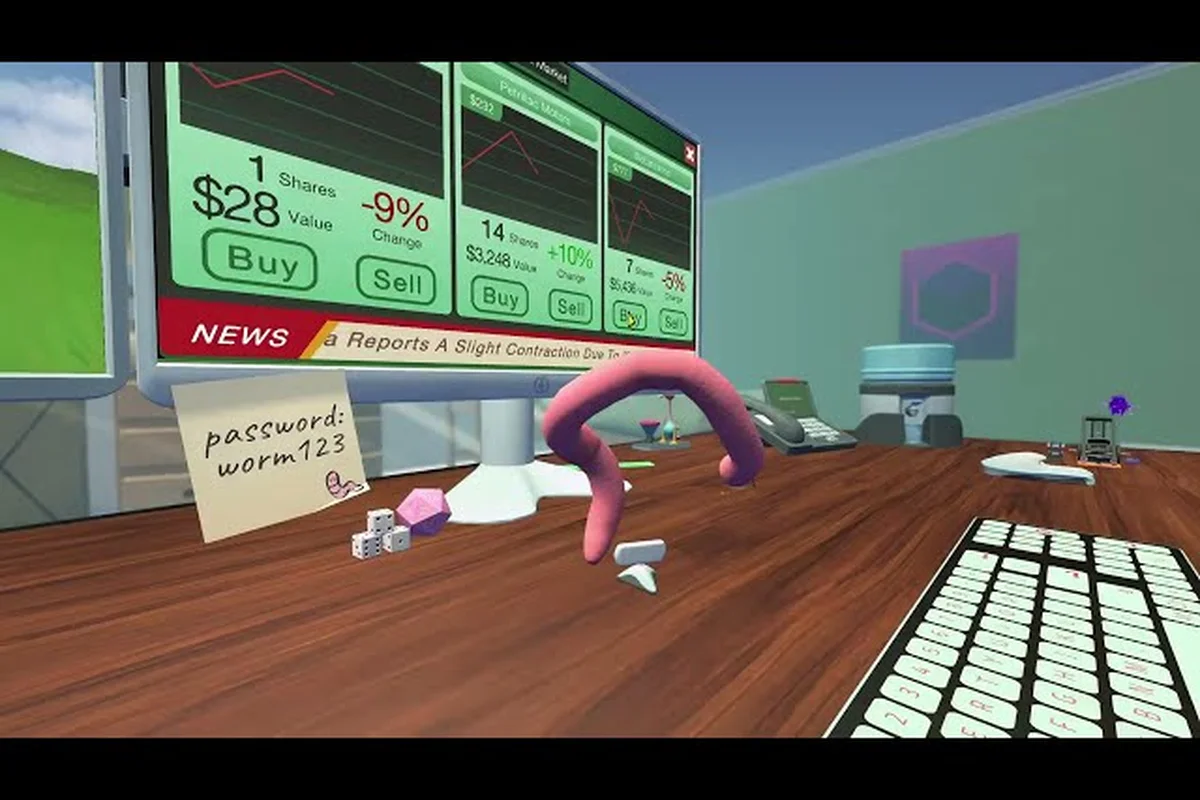
What surprises most players, based on community reports, is that the game shifts into an idler after roughly the first hour. Once the Stock Market unlocks, your daily income stops being something you earn purely with your own squishy body and becomes something your interns generate while you watch charts. Understanding that transition is the key to planning your worming from home daily income strategy, because the best money method on Day 1 is nearly worthless by Day 6.
How Daily Income Actually Works in Worming from Home
Before optimizing anything, you need to understand the three income layers the game stacks on top of each other. Each layer unlocks at a different point, and each one scales differently, which is why the worming from home best money method changes as your playthrough progresses.
The Three Income Layers
The reason this balance works comes down to diminishing returns on each layer in isolation. Grinding office tasks alone caps out fast because each task pays a flat rate no matter how fast you worm across the keyboard, while interns only pay off if you keep generating active income to afford more of them. A typical mid-game run shows this clearly: players who reinvest their first 10,000 in task earnings into two interns, then funnel the freed-up time into stock positions, hit the million-dollar milestone noticeably earlier than pure task grinders.
-
Active task income — money earned directly by completing office work with your worm body
-
Intern passive income — hired interns who generate cash automatically while you do anything else
-
Stock market returns — investments that compound daily once the market unlocks
The table below summarizes how each layer behaves so you can see at a glance where your time is best spent. Notice how the effort column shrinks while the scaling column grows as you move down: active office tasks demand constant keyboard worming but pay a flat rate per task, interns cost a one-time purchase and then generate cash even while you idle, and stock positions need only a few minutes of daily attention yet compound into the bulk of your late game money. This is why the best money method shifts over a run — early game income comes almost entirely from task grinding, while a million-dollar run typically has the majority of its daily income arriving passively by the final stretch.
| Income Layer | Unlocks | Effort Required | Scaling Potential |
|---|---|---|---|
| Active office tasks | Day 1 | High (physical keyboard work) | Low — flat per task |
| Intern passive income | Early-mid game | Low (one-time purchase) | Medium — stacks per intern |
| Stock market | ~1 hour in | Medium (daily attention) | High — compounding returns |
Why the First Hour Matters So Much
The first hour of Worming from Home is essentially a comedy job sim, and that's when your worming from home early game money is earned the hard way. Every spreadsheet you fill and every message you answer pays a modest amount, and because the physics are intentionally clumsy, each task takes longer than it should. That's by design — the game wants you to feel the pain of manual labor so that hiring your first intern feels like a genuine breakthrough.
Players on the Steam community review board consistently describe the same arc: about an hour of hands-on worm work, then a pivot to watching stock charts while interns handle the grind. If you know that pivot is coming, you can save aggressively during the manual phase instead of splurging on cosmetics early.
Early Game Money: Your First Days as a Jr. Analyst
The early phase is all about maximizing output from the only asset you have — your own worm body. Worming from home early game money is slow, but the habits you build here determine whether you can afford interns and stocks the moment they unlock.
Prioritize High-Pay Tasks
Not all office tasks pay equally, and community players report that message-answering tasks generally complete faster than full spreadsheets, giving you better money-per-minute even if the per-task payout looks smaller. Video calls tend to be the worst ratio early on because the ragdoll physics make staying on-camera genuinely difficult.
| Task Type | Approximate Speed | Pay Tier | Early Game Verdict |
|---|---|---|---|
| Answer messages | Fast | Medium | Best money-per-minute |
| Fill spreadsheets | Slow | High | Do when rested, avoid when rushed |
| Phone tasks | Medium | Medium | Solid filler between big tasks |
| Video calls | Slow | Medium | Skip early, easier with upgrades |
The practical loop is simple: chain fast message tasks back-to-back, dip into spreadsheets only when you have a clear stretch of time, and treat video calls as optional. This is the worming from home best money method for Days 1–2, before any automation exists.
Save, Don't Spend
It's tempting to buy the fun stuff — gym memberships, books, wardrobe items — the moment you can afford them. Resist. Every dollar you bank in the first two days shortens the runway to your first intern, and your first intern is the single biggest income jump in the early game. A reasonable target, based on community experience, is to keep at least 80% of your first two days' earnings untouched until the intern or stock options appear.
The Intern Economy: Your First Real Passive Income
Interns are where worming from home daily income stops being a chore. Once you can afford your first hire, the game quietly becomes an incremental idler, and your job shifts from doing the work to managing the people (well, worms) who do it for you.
How Intern Income Scales
Each intern generates money passively, and multiple interns stack. The exact per-intern rates vary by in-game progression, but the principle reported by players is consistent: interns pay for themselves quickly, and each additional hire raises your baseline daily income whether you're playing actively or not.
-
First intern — the biggest relative jump; buys back hours of manual keyboard work
-
Second and third interns — smooth out your baseline so slow play sessions still earn
-
Interns plus stocks — the combination that defines worming from home late game money
The strategic insight here is that interns convert your time into money even when you're not performing tasks. If you're the kind of player who likes to idle, front-load intern purchases. If you play actively, you can delay slightly and put that cash into the market instead.
Interns vs. Stocks: Which Comes First?
This is the most common early-mid game dilemma, and the answer depends on your playstyle. Interns are safe and immediate; stocks are volatile but compound harder. Community consensus leans toward buying your first intern or two for stability, then diverting surplus cash into the market once you have a cushion.
| Priority | Buy Interns First | Buy Stocks First |
|---|---|---|
| Best for | Idle-friendly players | Active daily players |
| Risk | None | Market dips can hurt |
| Income shape | Flat, reliable | Spiky, compounding |
| Recommended split | 60/40 toward interns | 40/60 toward stocks |
If you want to go deeper on the market side of this decision, our breakdown of Worming from Home passive income stocks covers which investments hold up through market dips and how to time your entries.
Late Game Money: The Stock Market and Infinite Scaling
Roughly an hour in, the Stock Market unlocks and the game's economy inverts. Instead of earning money, you're now growing it — and this is where worming from home infinite money conversations start, because compounding returns can snowball far beyond anything manual labor produces.
Why Stocks Beat Everything Late
The math is straightforward: active tasks pay a flat rate no matter how rich you are, while stock returns scale with your principal. Once your portfolio is large enough, a single good market day out-earns an entire session of keyboard-slamming. This is why the worming from home best money method for late game is almost always "max your positions, check daily, reinvest."
-
Reinvest daily — compounding only works if returns go back into the market
-
Watch for dips — buying during downturns amplifies long-term gains
-
Don't panic-sell — community players report dips usually recover within a few in-game days
The stock system updates on a daily cycle, so a quick check-in each in-game morning is enough to stay on top of it. Players who treat it like a real (tiny) portfolio consistently out-earn those who ignore it for days at a time. For timing specifics, our guide on when stock prices update and reset walks through the daily cycle and how to plan purchases around it.
Is There a Worming from Home Money Glitch?
Short answer: nothing confirmed as of September 2026. Given the game's idler design, most "glitch" reports circulating in communities turn out to be the intended intern-plus-stocks compounding loop, which genuinely can feel like infinite money once it gets rolling. Because the developer — a two-person team including a former Epic Games developer — released the game just yesterday, any real exploits would likely be patched quickly anyway. The honest worming from home best money method isn't a glitch at all: it's stacking interns early, compounding stocks daily, and letting the incremental systems do the heavy lifting.
The Spending Guide: Where Your Money Should Actually Go
Earning is half the equation; the other half is not wasting it. A common mistake is dumping early game money into cosmetic upgrades before your worm farm infrastructure can scale — every coin spent on a composter or automated feeder in the first few days compounds into higher passive daily income later. This worming from home spending guide ranks every major purchase category by its return on investment, from early game essentials like soil quality upgrades to the late game money sinks that only make sense once your best money method is already running at full capacity.
Spending Priority Tiers
| Priority | Purchase | Income Impact | When to Buy |
|---|---|---|---|
| 1 | First intern | Very High | As soon as affordable |
| 2 | Stock market capital | Very High | After 1-2 interns |
| 3 | Upgrades (task speed) | High | Early, before automation |
| 4 | Additional interns | Medium-High | Steadily through mid game |
| 5 | Fitness and books | Low-Medium | When surplus allows |
| 6 | Cosmetics and wardrobe | None | Purely for fun, late game |
The top three rows are non-negotiable if your goal is maximizing worming from home daily income. Everything below them is quality-of-life or flavor — the gym and reading options feed into the game's lifestyle simulation side, and while they may contribute to promotions or story beats, they won't compound your bank account the way interns and stocks do.
What to Avoid Buying Early
The classic new-player mistake is front-loading lifestyle purchases. Cosmetics, fancy furniture, and wardrobe items have zero income return, and every dollar spent on them in the first two days delays your first intern. Community players who speedrun the wealth curve consistently recommend a strict income-first budget until the stock market unlocks, then loosening up once passive income covers your baseline. If you're tracking your overall progress toward the game's wealth milestones, our net worth and affordability guide breaks down the side income sources and what each tier of spending actually unlocks.
Putting It All Together: A Day-by-Day Income Plan
Here's how the full strategy looks when you sequence it correctly, based on aggregated player experience from the launch window. The core principle behind this ordering is that every dollar earned in the manual worming phase has a compounding destination — either an intern (which converts your clicks into permanent passive income) or a stock position (which grows your worming from home daily income while you sleep). Players who deviate from this sequence, usually by splurging on cosmetic or lifestyle upgrades in the first two days, consistently report hitting a wall around the mid-game promotion requirements, because their income curve stays flat while costs scale. The timeline below assumes roughly an hour of playtime spread across the first week, which matches the pacing most launch-window players described.
-
Days 1-2 — grind message tasks aggressively, bank 80%+ of earnings, skip all lifestyle purchases
-
Day 3 (roughly the 1-hour mark) — buy your first intern the moment it's available; this is your income inflection point
-
Days 3-4 — add a second intern if affordable, put surplus into the newly unlocked stock market
-
Days 4-5 — shift to a stocks-first split; check the market each in-game morning and reinvest returns
-
Days 5-6 — passive income should now exceed anything you could earn manually; focus on market timing and promotion goals
The beauty of this plan is that it front-loads the boring part. Two days of disciplined grinding buys you an economy that mostly runs itself, which is exactly what the game's idler design is built around. The official release trailer from IGN's showcase coverage captures this arc well — it opens on manual worm drudgery and ends with the promise of climbing the corporate ladder, and money is the ladder.
One final note on the endgame: once your portfolio is compounding and interns cover your baseline, your worming from home daily income effectively becomes self-sustaining, and the remaining challenge is the promotion track and the hidden Wormhole platforming levels. At that point, spending freely on the fun stuff is fine — you've earned it, literally.
Frequently Asked Questions
What is the worming from home best money method for beginners?
Chain fast message-answering tasks back-to-back during your first two days, banking most of what you earn. Avoid video calls early since the ragdoll physics make them slow. Save at least 80% of earnings until your first intern becomes available, because that hire is the biggest early income jump in the game.
How do I unlock the stock market in Worming from Home?
The stock market unlocks after roughly one hour of play, according to community reports. Once available, it becomes your primary late-game income source. Check prices each in-game morning, reinvest all returns to compound growth, and avoid panic-selling during dips, which players say typically recover within a few in-game days.
Is there a working worming from home money glitch?
No confirmed glitch exists as of September 2026. Most "infinite money" reports describe the intended intern-plus-stocks compounding loop, which legitimately snowballs once established. Since the game launched on September 4 from a two-person team, any real exploit would likely be patched fast — the legitimate stacking strategy is more reliable anyway.
Should I buy interns or invest in stocks first?
Buy your first one or two interns first for stable, guaranteed passive income, then divert surplus cash into stocks. Interns carry you through slow sessions while stocks compound harder over time. Active daily players can shift to a stocks-heavy split sooner, while idle-friendly players should keep prioritizing interns through the mid game.
What should I spend money on last in Worming from Home?
Cosmetics, wardrobe items, and furniture should come last because they generate zero income return. Fitness and books sit in the middle tier, potentially supporting promotions and story content. Once your interns and stock portfolio produce more than you can spend, lifestyle purchases become harmless fun rather than progression blockers.